



- Free community services for immigrants and refugees
- Information to help you settle in (RAMQ, SIN, driver’s license, daycare registration, finding housing, etc.)
- Referrals to appropriate resources (employment, housing, health, education, etc.)
- Information on Québec society
- Intercultural exchange program
- Partner community organizations | Gouvernment of Québec
- R Host organizations | Government of Québec
Little Things That Can Help
Little everyday things can make life more enjoyable and help you adapt to a new environment.
Key messages
- Adopting healthy lifestyle habits like eating well, moving your body, sleeping well and getting enough natural light helps you feel better from day to day.
- Practising relaxation techniques can help you manage stress better
- Taking part in simple and affordable hobbies strengthens. relationships, reduces stress and makes you more resilient.
Eating well
Did you know?
In Québec, restaurants and grocery stores offer dishes and foods from around the world. This may come as a surprise!
Knowing the nutritional and caloric value of foods helps you eat a balanced diet. The percentages on the back of the packaging indicate how much sugar, salt, fat, etc. the product contains, which helps you make choices.
Eating a balanced and varied diet is essential for your physical health. This can also be budget-friendly and fun.
In your daily life, eating well can help:
- Manage stress
- Regulate your appetite and digestion
- Boost your energy and mood
- Improve your concentration and memory
- Prevent chronic diseases (diabetes, high blood pressure, obesity, cancer, etc.)
Important
When you arrive in Québec, your eating habits may change. This can result in deficiencies, gaining or losing weight, consuming too much sugar or becoming dependent on fast food.
If you are concerned, talk to a health professional.

- Prepare meals at home, a great choice for your budget and health.
- Avoid fast food that is processed and high in salt, fat or sugar.
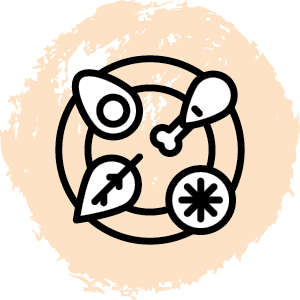
- Eat a varied and balanced diet that includes:
- Protein, including many options that are cheaper than meat, poultry or fish (legumes, pulses, eggs, nuts, tofu, etc.)
- Essential nutrients like omega-3 fatty acids, vitamins and antioxidants
- Foods that are good for your digestion and cardiovascular health, like fibre and healthy fats
- Drink around 2 litres of water each day to keep in shape, stay focused and improve your health.

To save money:
- Buy products that are in season.
- Choose affordable products (root vegetables, bananas, apples, frozen vegetables, etc.).
- Check paper or online flyers for deals before going to the grocery store.
- Don’t hesitate to use community food banks if needed.
Did you know?
In Québec, there are many community resources available to help low-income people get food. For example:
- Food banks (which offer free food for individuals and families in need)
- Discount stores
- Community kitchens
These free or low-cost services are available to anyone in need. To find a resource near you, see: Community organizations and food relief | 211.
Sleeping well
Stress and the pace of daily life can be draining. It is important to give yourself time to recover and to:
- Get quality sleep (7–9 hours per night)
- Relax
- Take occasional naps
- Stick to a regular schedule and a bedtime routine.
- Create a calm environment (dim lighting, silence or relaxing music, pleasant scents, earplugs).
- Limit screens at least one hour before bedtime.

- Before bedtime, stick to light snacks and avoid alcohol or stimulants (energy drinks, caffeine, nicotine, etc.).

- Move your body during the day and avoid intense physical activity before bedtime.
- Do some stretching to relax.
- Pay attention to your body and your energy levels.
- Adopt healthy stress management techniques.
To find out more
Limiting or avoiding nicotine, alcohol and cannabis
Alcohol, cannabis and cigarettes are often associated with socialization or relaxation. However, too much can be harmful and increase your risk of chronic diseases and mental health issues.
To take care of yourself, it is recommended that you:
- Use alcohol and cannabis in moderation
- Avoid products that contain nicotine

- Find out about the side effects of alcohol, cannabis and nicotine.
- Be careful of vaping, which also comes with long-term health risks.
- Check the legal alcohol limits before driving.

- Find healthy alternatives to socialize or manage stress (group sports, games, hobbies or cultural activities).
Moving your body regularly
There is no need to focus on performance to enjoy the positive effects of physical exercise. Simple activities like walking are enough.
In addition to improving your physical health, moving your body regularly helps:
- Prevent chronic diseases
- Improve memory, concentration and sleep
- Reduce stress
- Make friends when it is a group activity
For seniors, staying active helps with independence and balance.

- Set realistic goals.
- Incorporate simple activities into your routine, like walking to school or work.
- Set aside space at home to exercise or relax.
- Spend time with active people to stay motivated.
- Encourage children to play each day and to participate in sports and recreational activities.
Getting enough natural light
No matter the season, spending time outside is beneficial.
Natural light exposure helps the body produce vitamin D, which is essential for physical and mental health. Too little vitamin D can increase your risk of depression.
Did you know?
In Québec, spring and summer offer the sunniest conditions, while fall and winter are darker. This means it is important to adapt to each season.

- Do outdoor activities during the day.
- Open the curtains in the morning to let the light in.
- Protect your skin with sunscreen.

In winter and fall:
- Eat foods rich in vitamin D (vitamine D-fortified soy beverages, fatty fish such as salmon, mackerel or sardines).
- Ask a pharmacist what supplements are available.
- Try light therapy (a special lamp that imitates natural light).
- Take advantage of sunny days, even when it is cold outside.
To find out more
Participating in low-cost activities
Having fun and taking your mind off things doesn’t necessarily require a big budget. Simple activities like cooking, gardening or tinkering are accessible and can do you a lot of good.
They can:
- Stimulate your imagination, spark curiosity and improve concentration
- Reduce stress
- Help you make friends and build skills

- Find out what green spaces, leisure areas, sports facilities and community spaces are available in your neighbourhood.
- Budget for your activities.
- Organize social activities (picnics, hikes, games, etc.).
- Be open to trying new activities.
- Volunteer.

- Take advantage of free loans and activities at your local public library by getting a library card.
To find out more
Practising relaxation
Relaxation is simple and accessible to everyone.
With regular practice, relaxation promotes:
- Stress management and emotional balance
- Quality sleep and concentration
- A lasting feeling of calm and satisfaction

- Do deep breathing exercises.
- Take a relaxing bath.
- Practise meditation, yoga, tai chi or qigong.
- Do some stretching.

- Remember happy moments (for example, by looking at photos or videos).
- Encourage yourself with positive self-talk.

- Visit calm places like municipal parks and green spaces.
- Listen to relaxing music.
Centre intégré universitaire de santé et de services sociaux du Centre-Sud-de-l’Île-de-Montréal. (2024). Conseils et prévention – Alimentation saine et durable. https://ciusss-centresudmtl.gouv.qc.ca/conseils-et-prevention/conseils-et-prevention-alimentation-saine-et-durable
Centre RBC d’expertise universitaire en santé mentale. (2024). Stratégies pour apprivoiser mon stress. https://sante-mentale-jeunesse.usherbrooke.ca/je-suis-un-jeune/boite-a-outils-2/strategies-pour-apprivoiser-mon-stress/
Gouvernement du Canada. (2013). Dépendance à la nicotine. https://www.canada.ca/fr/sante-canada/services/tabagisme-et-tabac/effets-tabagisme-fumee-secondaire-sante/dependance-nicotine.html
Gouvernement du Canada. (2021). Les risques de l’alcool pour la santé. https://www.canada.ca/fr/sante-canada/services/dependance-aux-drogues/alcool/risques-sante.html
Gouvernement du Canada. (2022). Conseils en matière de nutrition pour les différentes étapes de la vie. https://guide-alimentaire.canada.ca/fr/application-lignes-directrices/conseils-differentes-etapes-de-la-vie/
Laboratoire de recherche et d’actions pour les personnes ayant des problèmes de santé mentale et leurs proches. (2022). Retrouver le calme avec la pleine conscience. Université du Québec en Outaouais. https://lapproche.uqo.ca/guide-jeunes-outils-pleine-conscience/
Latham, M. (2001). Les maladies chroniques à implications nutritionnelles. Dans La nutrition dans les pays en développement. Organisation des Nations Unies pour l’alimentation et l’agriculture. https://www.fao.org/4/w0073f/w0073f24.htm#P1_11https://www.fao.org/4/w0073f/w0073f24.htm#P1_11
Radio Canada. (2018). Venir en aide aux immigrants qui vivent un choc alimentaire [Balado]. Consulté 27 mars 2025, à l’adresse https://ici.radio-canada.ca/ohdio/premiere/emissions/les-eclaireurs/segments/entrevue/81990/immigration-alimentation-nutrition-probleme-hiver-aide-santehttps://ici.radio-canada.ca/ohdio/premiere/emissions/les-eclaireurs/segments/entrevue/81990/immigration-alimentation-nutrition-probleme-hiver-aide-sante
TOUGO. (2024). Favoriser mon sommeil chaque jour. https://montougo.ca/wp-content/uploads/2024/07/TOUGO-Objectif-Equilibre-2024.pdf
Health Care and Services
Knowing certain information about insurance, institutions and the roles of different professionals can help you access care and services.
Key messages
- Check with the RAMQ as soon as possible to see if you are eligible for public health and prescription drug insurance.
- People not covered by the RAMQ must pay to receive care and services. Private insurance may cover some costs.
- In Québec, accessing care and services may be different than your country of origin. Don’t hesitate to ask for help (for example, from a community organization offering support to immigrants and refugees).
Where to start
Québec’s health care system can be complex for newcomers. It is normal to have trouble navigating it.
“At some community organizations, an intercultural community counsellor (ICI Santé) can guide you and help you with the process. Don’t hesitate to use this service!”
EI FC TFW Community organizations offering support to immigrants and refugees can help you when you first arrive, for example to:
- Take out health insurance (RAMQ, private insurance, etc.)
- Access the care and services you need
R Your host organization or your sponsor can help you make an appointment with your local refugee health team. When you arrive, you are entitled to a physical health and wellness assessment. Using this service can help you access the care and services you need.
IS Find out what services your educational institution offers international students. You are usually entitled to support to help you get settled.
Quiz
Résultats
#1. Québec has:
Accessing the care and services you need
It is not always easy to know where to go or who to talk to for care and services.
Here are some resources to help you:
Emergency services | 911
- For any emergencies (police, ambulance, fire department, etc.)
- 24 hours a day, 7 days a week
- 911
- Urgence 9-1-1 | Government of Québec [French only]
Important
If you are not covered by the RAMQ, the IFHP, or a public health insurance plan from another Canadian province, a significant surcharge (200%) applies to fees for care and services received at a public institution (hospital, CLSC, etc.).
To find out more, see Private insurance plans.
Find a hospital
- 24 hours a day, 7 days a week
- Contact information for hospitals in Québec
- Trouver un hôpital | Index Santé [in French]
Important
Public care and services are free for people covered by the RAMQ. To find out more, see Régie de l’assurance maladie du Québec.
TFW IS If you have private insurance coverage, some professionals may offer you covered care and services. Check with your insurance provider. To find out more, see Private insurance plans.
R When you arrive, you are automatically covered by the Interim Federal Health Program while you wait to receive your RAMQ card. To find out more, see Interim Federal Health Program. Your host organization authorized by the MIFI or your sponsor can assist you.
CLIC Santé
- Online appointments for free (with the RAMQ) or fee-based services (vaccination, testing, screening, contraception, etc.)
- Find your appointment | Clic Santé
Bonjour-Santé
- Online appointments for free medical appointments with the RAMQ
- Book your appointment online | Bonjour-Santé
Find a same-day or next-day medical appointment
- Search engine to find a free (with the RAMQ) or fee-based medical appointment
- For people without a family doctor or whose family doctor is unavailable
- Find clinics offering same-day or next-day medical appointments | Government of Québec
Info Salud PTET-CALFA
- TFW Free services for TFWs with a closed work permit
- Listening service
- Individual psychosocial support and group support sessions (Spanish-language services available to anyone who speaks Spanish, regardless of immigration status)
- Information on health care services and occupational health and safety
- Medical consultations for non-urgent needs
- French, English, Spanish
- Phone, WhatsApp, email
- 1 888-286-7584
- WhatsApp: 514-776-7120
- SoutienTET@calfa.ca
- Hola, ¿ còmo podemos ayudarte? | Info Salud PTET-CALFA
Primary Care Access Point (GAP)
- Support and recommendations to find the health care service that best meets your needs (renewing a prescription, vaccination, medical appointment, etc.)
- For people without a family doctor or NPSPC
- Free
- 811, option 3 for phone assistance
- Welcome to the digital Primary Care Access Point (GAP) | Government of Québec
Info-Santé 811
- Health advice and referrals
- 24 hours a day, 7 days a week
- Free
- 811, option 1
Pediatric 811 line
- Health advice and referrals for children aged 0–17
- Free
- 811, option 1, then option 2
Info Salud PTET-CALFA
- TFW Free services for TFWs with a closed work permit
- Listening service
- Individual psychosocial support and group support sessions (Spanish-language services available to anyone who speaks Spanish, regardless of immigration status)
- Information on health care services and occupational health and safety
- Medical consultations for non-urgent needs
- French, English, Spanish
- Phone, WhatsApp, email
- 1 888-286-7584
- WhatsApp: 514-776-7120
- SoutienTET@calfa.ca
- Hola, ¿ còmo podemos ayudarte? | Info Salud PTET-CALFA
To find out more
Public health and prescription drug insurance plans
Important
Before you leave, it is important to check if you are eligible for the public health and prescription drug insurance plans. If so, check if there are steps to take in your country of origin as soon as possible (for example, getting a certificate of coverage).
The RAMQ administers Québec’s health and prescription drug insurance plan. People who are eligible and registered have free access to covered health care and services.
Prescription drug insurance gives you access to prescription drugs at a reduced rate.
Waiting period
When you register for the RAMQ insurance, coverage usually starts after a waiting period of up to 3 months.
During this waiting period:
- The RAMQ does not reimburse you for health care and services received, with certain exceptions (pregnancy, childbirth, sexual assault, etc.)
- It is strongly recommended that you take out private insurance coverage once you arrive in Québec
TFW If you have a closed work permit, check if your employer is responsible for paying for private insurance that covers emergency medical care.
For some people, there are Exceptions to the application of the waiting period | RAMQ.
To find out more
R When you arrive in Québec, you are automatically covered by the IFHP.
This coverage applies:
- While you are waiting to receive your health insurance card from the RAMQ (waiting period)
- To some complementary services (psychologist, physiotherapist, dentist, optometrist, etc.) during your first year in Québec
Many CLSCs and some clinics accept the IFHP. To find out which providers offer care and services covered by the IFHP, use the tool Provider Search | Government of Canada.
Know that hospitals are required to provide the necessary care to people whose lives or physical integrity is at risk.
Important
- Your host organization authorized by the MIFI or your sponsor can help you find health professionals whose services are covered by the IFHP. If you can’t find any, you may have to go to a private clinic and pay for some care yourself.
- Health professionals who are not registered as IFHP providers may refuse to provide care or bill you for the care and services received.
- Health professionals are sometimes unfamiliar with or misunderstand the IFHP. You may need to explain what it is and insist on receiving care.
Private insurance plans
If you are not eligible for the RAMQ, taking out private insurance can help. This can cover part of the cost of health and social services and prescription drugs.
Generally, you will need to pay a monthly fee for private insurance, known as a “premium.”
Some private plans offer coverage through a job or a study abroad. However, this type of insurance is often limited. It generally does not cover all health care needs. For example, private insurance may:
- Only include prescription drug insurance
- Not cover all health and social services for a pre-existing health condition when the contract takes effect (pregnancy, asthma, high blood pressure, etc.).
This means it is essential to check exactly what is covered by your private insurance and how much is reimbursed. If needed, you can take out private insurance with more coverage.
TFW If you have an open work permit, check if it makes you eligible for RAMQ coverage. If not, it is important to take out private insurance that meets your needs.
Important
It is important to know if your private insurance reimburses a portion of the fees for care and services offered by public institutions (hospitals, CLSCs, etc.).
If you are not covered by the RAMQ, the IFHP, or a public health insurance plan from another Canadian province, a significant surcharge (200%) applies to fees for care and services.
Additional insurance (optional)
Generally, it is possible to take out additional insurance on top of basic private insurance. This insurance may cover:
- Mental health consultations (for example, with a psychologist)
- Vision care
- Dental care
- Physiotherapy
- Pregnancy-related care
However, additional insurance may not cover all health care needs.
You may have access to private insurance offered by:
- An employer
- A professional organization (association, order or union) if you are a member
- Some plans only cover prescription drugs. Others may cover health care and services and offer optional additional services.
Did you know?
In some cases, you can:
- Be covered by your spouse’s insurance plan if it is through their job
- Add your child to your insurance plan if it is through your job
Most educational institutions in Québec require you to be covered by their own private plan. This type of insurance generally covers basic medical and hospital costs.
Important
IS Private health and hospitalization insurance coverage can vary considerably. It is essential to check which types of care, services and amounts are covered. For example, some insurance plans may exclude certain types of care (C-sections, intensive care for newborns, etc.) or cap the reimbursement at a percentage and an annual limit.
Tips:
- Find out if your educational institution offers health and hospitalization insurance for international students.
- Find out what is covered (care, services, prescription drugs).
- Take out additional insurance to cover other types of care and services, depending on your needs.
If no insurance is offered, you will need to find it elsewhere. Your educational institution can help you with this process.
Otherwise, contact the Canadian Life & Health Insurance Association (CLHIA) for information about insurance companies.
Institutions and organizations offering care and services
To receive care or services, you must present your health insurance card (RAMQ) or your private insurance information.
Important
Wait times to receive care and services in the public system can be long. Although this is frustrating, know that the entire Québec population is affected.
Click on the icons to find out more.





Health and social services professionals
The roles of professionals in Québec may differ from your country of origin. Understanding them can help you navigate the health care system.
Click on the icons to find out more.






Know that you can be seen by other health and social services professionals. For example:
Your rights
As a user of the health and social services system, you are entitled to:
- Clear information about your physical and mental health and possible treatments
- Care and services that are quality, safe and tailored to your health condition
- Consent to or refuse care, treatments or exams (from the age of 14)
- Have the information in your medical file kept confidential (from the age of 14)
If needed, an interpreter may be available free of charge to help you understand the care and services offered. Staff members at health institutions can request one from the Banque d’interprète du RSSS | Government of Québec [in French]. Know that interpreters are trained and have a duty of confidentiality.
TFW If you hold a closed work permit you can access free translation and interpreting services offered by the Service d’interprète d’aide et de référence aux immigrants.
Translation and interpretation services for temporary foreign workers | Service d’interprète d’aide et de référence aux immigrants
- TFW Free services for TFWs with a closed work permit
- Translation and interpretation services in 52 languages and dialects (document translation or interpretation in situations such as job loss, an accident, illness, etc.)
- Services offered remotely
- Phone, WhatsApp, video call and email
- 1 514-585-4763
- TET@siari.org
- Translation and interpretation | InfoTET
Centre intégré universitaire de santé et de services sociaux de la Capitale-Nationale. (2025). Banque d’interprètes communautaires et de navigation. Gouvernement du Québec. https://www.ciusss-capitalenationale.gouv.qc.ca/services/bicn
CSMO-ESAC. (s. d.). Intervenant – Intervenante (technicien.ne en travail social). https://www.csmoesac.qc.ca/metiers/intervenant-intervenante
Gouvernement du Québec. (2025). Centre local de services communautaires (CLSC). https://www.quebec.ca/sante/systeme-et-services-de-sante/organisation-des-services/clsc
Gouvernement du Québec. (2022). Comment obtenir des conseils pour un enfant de 0 à 17 ans. https://www.quebec.ca/sante/systeme-et-services-de-sante/organisation-des-services/services-de-sante-et-services-sociaux-de-premiere-ligne/comment-obtenir-conseils-rendez-vous-medical-enfant-0-17-ans
Gouvernement du Québec. (2025). Condition pour embaucher un travailleur étranger temporaire avec le traitement simplifié. https://www.quebec.ca/entreprises-et-travailleurs-autonomes/administrer-gerer/embauche-gestion-personnel/recruter/embaucher-immigrant/embaucher-travailleur-etranger-temporaire/traitement-simplifie/conditions
Gouvernement du Québec. (2025). Conditions requises pour étudier au Québec. https://www.quebec.ca/education/etudier-quebec/conditions-requises
Gouvernement du Québec. (2025). Connaître les cliniques qui offrent des consultations médicales le jour même ou dans les jours suivants. https://sante.gouv.qc.ca/repertoire-ressources/consultations-medicales-sans-rendez-vous/
Gouvernement du Québec. (2023). Consulter un médecin spécialiste. https://www.quebec.ca/sante/trouver-une-ressource/consulter-un-medecin-specialiste
Gouvernement du Québec. (2025). Groupe de médecine de famille (GMF), groupe de médecine de famille universitaire (GMF-U) et groupe de médecine de famille accès/réseau (GMF-A/R). https://www.quebec.ca/sante/systeme-et-services-de-sante/organisation-des-services/gmf-gmf-u-et-super-clinique
Gouvernement du Québec. (2025). Guichet d’accès à la première ligne. https://www.quebec.ca/sante/trouver-une-ressource/guichet-acces-premiere-ligne
Gouvernement du Québec. (2025). Infirmiers / infirmières. https://www.quebec.ca/emploi/informer-metier-profession/explorer-metiers-professions/31301-infirmiers-infirmieres
Gouvernement du Québec. (2022). Info-Santé 811. https://www.quebec.ca/sante/trouver-une-ressource/info-sante-811
Gouvernement du Québec. (2020). Info-Social 811. https://www.quebec.ca/sante/trouver-une-ressource/info-social-811
Gouvernement du Québec. (2025). Médecins omnipraticiens / omnipraticiennes et médecins de famille. https://www.quebec.ca/emploi/informer-metier-profession/explorer-metiers-professions/31102-medecins-omnipraticiens-omnipraticiennes-et-medecins-de-famille
Gouvernement du Québec. (2025). Obtenir une consultation avec un professionnel de la santé si vous avez un médecin de famille ou une infirmière praticienne spécialisée en soins de première ligne. https://www.quebec.ca/sante/systeme-et-services-de-sante/organisation-des-services/services-de-sante-et-services-sociaux-de-premiere-ligne/comment-obtenir-consultation-avec-professionnel-sante/vous-avez-un-medecin-de-famille
Gouvernement du Québec. (2025). Pharmaciens et pharmaciennes. https://www.quebec.ca/emploi/informer-metier-profession/explorer-metiers-professions/31120-pharmaciens-pharmaciennes
Gouvernement du Québec. (2025). Services offerts par les infirmières praticiennes spécialisées (IPS). https://www.quebec.ca/sante/systeme-et-services-de-sante/organisation-des-services/infirmieres-praticiennes-specialisees/services-offerts-par-les-infirmieres-praticiennes-specialisees
Index Santé. (2025). Hôpitaux. https://www.indexsante.ca/hopitaux/
Ministère de la Santé et des Services sociaux (MSSS). (2018). Mission des établissements de santé et de services sociaux québécois. https://www.quebec.ca/sante/systeme-et-services-de-sante/organisation-des-services/systeme-quebecois-de-sante-et-de-services-sociaux/mission-etablissements-sante-services-sociaux-quebec
Ministère de la Santé et des Services sociaux (MSSS). (2021). Services de proximité, services sociaux et communautaires. Pharmacies communautaires. Gouvernement du Québec. https://www.msss.gouv.qc.ca/professionnels/soins-et-services/guide-urgences-services-de-proximite-services-sociaux-et-communautaires/pharmacies-communautaires/
Ministère de la Santé et des Services sociaux (MSSS). (2025). Circulaire. Tarifs pour les services rendus en externe, prix de journée pour la courte et la longue durée ainsi que prix de journée pour la réadaptation, les nouveau-nés et les services aux jeunes. Gouvernement du Québec. https://g26.pub.msss.rtss.qc.ca/Formulaires/Circulaire/ConsCirculaire.aspx?enc=cnHcaKRO81A=
Ministère de la Santé et des Services sociaux (MSSS). (2025). Médecin spécialiste. Gouvernement du Québec. https://avenirensante.gouv.qc.ca/carrieres/medecin-specialiste
Ordre des pharmaciens du Québec. (2025). Le rôle du pharmacien communautaire. https://www.opq.org/protection-du-public/votre-pharmacien-et-vous/role-du-pharmacien/pharmacien-communautaire/
Ordre des psychologues du Québec. (2025). Qu’est-ce qu’un psychologue?. https://www.ordrepsy.qc.ca/un-psychologue
Ordre des travailleurs sociaux et des thérapeutes conjugaux et familiaux du Québec. (2025). Découvrir nos professions. https://www.otstcfq.org/public/nos-professions/decouvrir-nos-professions/
Régie de l’assurance maladie du Québec (RAMQ). (2020). Assurance maladie. Gouvernement du Québec. https://www.ramq.gouv.qc.ca/fr/citoyens/assurance-maladie
Régie de l’assurance maladie du Québec (RAMQ). (2020). Connaître les conditions d’admissibilité à l’assurance maladie. Gouvernement du Québec. https://www.ramq.gouv.qc.ca/fr/citoyens/assurance-maladie/connaitre-conditions-admissibilite
Régie de l’assurance maladie du Québec (RAMQ). (2020). Connaître les conditions d’admissibilité au régime public. Gouvernement du Québec. https://www.ramq.gouv.qc.ca/fr/citoyens/assurance-medicaments/connaitre-conditions-admissibilite-regime-public
Régie de l’assurance maladie du Québec (RAMQ). (2020). Renseignements sur les régimes privés. Gouvernement du Québec. https://www.ramq.gouv.qc.ca/fr/citoyens/assurance-medicaments/renseignements-regimes-prives
Régie de l’assurance maladie du Québec (RAMQ). (2020). Responsabilités des employeurs et des assureurs. Gouvernement du Québec. https://www.ramq.gouv.qc.ca/fr/citoyens/assurance-medicaments/responsabilites-employeurs-assureurs
Asking for Help When Things Get Hard
Paying attention to your mental health and knowing where to find support helps you recognize your needs.
Key messages
- It is normal to not always be doing well. Asking for help is a sign of strength, not weakness.
- Migration-related stress can affect your mental health. Recognizing the signs of distress can help you know when it is time to ask for help.
- If you are not doing well, don’t face it alone. Support from a loved one or professional help can provide comfort, potential solutions and resources.
What is mental health?
Mental health is a person’s level of mental well-being at a given time. This level changes over time based on your experiences, living conditions and the emotions associated with them.
Sometimes, we feel good, satisfied and confident. But sometimes we also go through more stressful and difficult periods when we feel depressed and discouraged.
What does it mean to have good mental health?
Having good mental health means having a good level of emotional, psychological and social well-being.
- Emotional well-being: Feeling positive emotions (satisfaction, optimism, curiosity, motivation, enjoyment, interest, enthusiasm, etc.)
- Psychological well-being: Being able to reach your potential and overcome challenges in life (feeling useful at work, developing skills, feeling like your life has meaning, adapting to a new environment, feeling confident in your abilities, etc.)
- Social well-being: Feeling like you are contributing to the community (building relationships with others, having a social life, feeling like you belong, etc.)
What influences your mental health?
Mental health depends on how a person and their environment adapt to each other. Some conditions can improve your mental health, while others can harm it. Click on the icons to find out more.





Does everyone see mental health the same way?
Mental health can be understood differently from one culture or society to another. For example, for some people:
- Talking about mental health can be hard, since it involves topics that are sensitive or taboo.
- Mental health issues may be associated with madness or interpreted as a spiritual experience.
Prejudices and beliefs can prevent someone from asking for help, even when they really need it.
Myth: “I don’t have a mental illness, so my mental health is good.”
Reality. Not having a mental illness doesn’t necessarily mean that everything is fine. Having good mental health means feeling positive emotions (joy, interest, satisfaction, etc.) and functioning well in your personal and social life. You can feel exhausted, useless or unmotivated without having symptoms of mental illness. These feelings should not be ignored. Even if you do not have a mental illness, it is important to take care of yourself, cultivate your relationships and ask for help when needed.
Source: Keyes, C. L. M., 2002
What is mental illness?
Mental illness is when your mental health affects your thoughts, emotions, behaviours and body. It can make daily life harder and sometimes cause distress.
Anyone can have mental illness, no matter your age, gender identity, ethnic origin, social status, etc.
Some factors can increase the risk. These include:
- Discrimination
- Family history of mental illness
- Intense stress or trauma
- Social isolation
- Challenging living conditions
In Québec, a doctor or psychologist can diagnose you with mental illness.
There are several types of mental illness. Here are the most common ones.
Anyone can feel nervous or worried. This is normal, especially during big changes or stressful times (for example, writing an exam).
Anxiety becomes an issue when it’s getting too intense, lasts a long time or happens for no apparent reason. Someone with an anxiety disorder may:
- Avoid certain situations that scare them (for example, being in a crowd)
- Have excessive physical reactions (heart racing, shortness of breath, etc.)
- Be overwhelmed by fears and concerns (for example, “I have to plan for every scenario, I can’t deal with uncertainty” or “I’ll never find a job”)
- Try to control everything to feel safe.
There are several types of anxiety disorder, each related to a different source of anxiety (generalized anxiety, social anxiety, phobias, etc.).
Did you know?
In Québec, 13% of people aged 15 or older risk developing a generalized anxiety disorder.
Source: Statistics Canada (2023)
Anyone can feel sad, angry or discouraged depending on their experiences and the challenges they face.
These emotions become an issue if they are too strong, last a long time or are hard to control.
Someone with depression may:
- Lose interest in their work, hobbies or social relationships
- Withdraw
- Feel guilty, useless or hopeless
- Be more irritable or cry easily
- Experience physical discomfort (fatigue, pain, trouble sleeping, change in appetite)
- Have suicidal thoughts
There are several types of depression (major depression, seasonal depression, postpartum depression, etc.).
Did you know?
In Québec, 14% of people aged 15 or older risk having a major depressive episode.
Source: Statistics Canada (2023)
A traumatic event is when a person is exposed to:
- Death or risk of dying
- Serious injuries
- Sexual violence
For an event to be traumatic, a person can:
- Have experienced it directly
- Have witnessed it
- Learn that a loved one has experienced this type of event
After exposure, a person may develop post-traumatic stress disorder (PTSD) and:
- Feel like they are in danger, even after the event
- Relive the event in the form of memories or nightmares
- Avoid things that remind them of the event (places, situations, etc.)
- Have negative beliefs (for example, “I can’t trust anyone”)
- Experience difficult emotions (fear, anger, guilt, etc.)
- Be hypervigilant (getting startled easily, trouble sleeping, irritability, etc.)
Anyone can experience a traumatic event.
R Refugees have a higher risk of experiencing a traumatic event due to their experiences. The process of settling in and the living conditions in the country they settle in can improve or worsen their condition.
Did you know?
In Québec, in 2022, 3% of people aged 15 or older had post-traumatic stress disorder.
Source: Statistics Canada (2023)
Myth: “Mental health services, psychologists and psychiatrists are for people who are crazy.”
Reality. Fear of being considered “crazy” can prevent a person from asking for help. Having trouble is actually very normal. Ignoring your need for help can make the situation worse and isolate you from others.
Mental health professionals in Québec are trained to listen to you and support you without judging you. They assess the situation and offer solutions while respecting their patients’ confidentiality. Their assistance can be very useful.
Sources: Clement, S., Schauman, O., Graham, T., Maggioni, F., Evans-Lacko, S., Bezborodovs, N., & Thornicroft, G., 2015; Ahad, A. A., Sanchez-Gonzalez, M., & Junquera, P., 2023
How to know if you need help
Use the “How’s It Going?” tool to:
- Better understand how mental health affects your thoughts, body, behaviours and emotions
- Reflect on and identify ways to feel better
Remember that asking for help is not a sign of weakness! Being able to recognize what you are going through and talk about it is actually a strength.
How’s It Going?



 Thoughts
 Body
Body Feelings

Who to talk to or ask for help
If you are not doing well, don’t face it alone. You can start by talking to people you trust:
- Family members
- Friends
- Colleagues
- Support groups
- People in your religious or spiritual community (imam, priest, reverend, pastor, etc.)
These people can listen to you, comfort you or help you find resources or solutions.
Sometimes, their support is not enough. You may also prefer talking to someone you don’t know. If so, you can seek professional help.
Mental health help and support resources
Find the resources you need.
If you are concerned about your safety or a loved one’s safety, the following services can help.
Suicide.ca
- Support from a counsellor trained to talk openly about suicide
- French and English
- 24 hours a day, 7 days a week
- Phone: 1-866-277-3555 (in Québec), 988 (outside Québec)
- Text: 535353
- Chat
- Home | Suicide.ca
Canadian Mental Health Association hotline
- Help for people who are struggling, in distress or isolated
- 24 hours a day, 7 days a week
- 418-529-1899
- Home | Centre d’écoute téléphonique (SAISM)
Emergency services | 911
- For any emergencies (police, ambulance, fire department, etc.)
- 24 hours a day, 7 days a week
- 911
- Urgence 9-1-1 | Government of Québec [French only]
Find a hospital
- 24 hours a day, 7 days a week
- Contact information for hospitals in Québec
- Trouver un hôpital | Index Santé [in French]
Crisis centres
- Crisis intervention service
- 24 hours a day, 7 days a week
- Find a crisis centre in your area | RESICQ
Community organizations offering support to immigrants and refugees
- Free community services for immigrants and refugees
- Information to help you settle in (RAMQ, SIN, driver’s license, daycare registration, finding housing, etc.)
- Referrals to appropriate resources (employment, housing, health, education, etc.)
- Information on Québec society
- Intercultural exchange program
- Partner community organizations | Gouvernment of Québec
- R Host organizations | Government of Québec
TFW Community resources available for TFWs
Info TET Québec
- TFW Information, support and activities for TFWs
- French, English and Spanish
- 1 888-454-3998
- WhatsApp: 438-543-5062, 438-378-5152
- Accueil | infotetquebec.com
- Downloadable information guide in French/English, French/Spanish and French/Tagalog
Réseau d’aide aux travailleuses et travailleurs migrants agricoles du Québec (RATTMAQ)
- TFW Services for TFWs in the agricultural and food processing sector
- Reception at the airport, guidance and mental health and legal support
- Phone and chat
- WhatsApp: 514-415-8077
- Montérégie, Montréal and Laval: 1 514-415-8077
- Québec and Chaudière-Appalaches: 1 581-849-7941
- Saguenay-Lac-Saint-Jean: 1 581-574-8174
- Accueil | RATTMAQ
Info Salud PTET-CALFA
- TFW Free services for TFWs with a closed work permit
- Listening service
- Individual psychosocial support and group support sessions (Spanish-language services available to anyone who speaks Spanish, regardless of immigration status)
- Information on health care services and occupational health and safety
- Medical consultations for non-urgent needs
- French, English, Spanish
- Phone, WhatsApp, email
- 1 888-286-7584
- WhatsApp: 514-776-7120
- SoutienTET@calfa.ca
- Hola, ¿ còmo podemos ayudarte? | Info Salud PTET-CALFA
Service available to anyone in Quebec, regardless of their status
Info-Social 811
- Social services advice and referrals
- 24 hours a day, 7 days a week
- Free
- 811, option 2
These services are free and confidential.
Hotlines
- Support and listening service
- Some helplines are specifically for seniors, members of the 2SLGBTQIA+ community, women, etc.
- Trouver un centre d’écoute | Centres d’écoute téléphonique du Québec [in French]
Tel-jeunes Parents
- Support and listening service for parents of teenagers (aged 12 to 17) who are struggling
- Phone and chat available
- 1-800-361-5085
- Are you a parent? | Tel-jeunes parents
Interligne
- Listening and referral service for members of the 2SLGBTQIA+ community and their loved ones
- 24 hours a day, 7 days a week
- Phone, text, email and chat
- 1-888-505-1010
- Service d’aide et de renseignements | Interligne [in French]
Tel-jeunes
- Support and listening service for youth (aged 12–17)
- Phone, text and chat
- 1-800-263-2266
- Speak with a counsellor | Tel-jeunes
Kids Help Phone
- Mental health support for children, teens and young adults
- Phone, text and chat
- 1-800-668-6868
- Home | Kids Help Phone
CAP Santé mentale
- Support and referral service for loved ones of people with a mental health issue
- 1-855-272-7837
- The reference line for loved ones! | CAP Santé mentale
Info Salud PTET-CALFA
- TFW Free services for TFWs with a closed work permit
- Listening service
- Individual psychosocial support and group support sessions (Spanish-language services available to anyone who speaks Spanish, regardless of immigration status)
- Information on health care services and occupational health and safety
- Medical consultations for non-urgent needs
- French, English, Spanish
- Phone, WhatsApp, email
- 1 888-286-7584
- WhatsApp: 514-776-7120
- SoutienTET@calfa.ca
- Hola, ¿ còmo podemos ayudarte? | Info Salud PTET-CALFA
R When you arrive, you are entitled to a physical health and wellness assessment. Using this service can help you access the care and services you need. Your host organization or your sponsor can help you make an appointment with your local refugee health team.
Following services are confidential.
Psychological and social support (psychosocial intake)
Find a CLSC psychosocial intake
- Services for people covered by the RAMQ (human relations officer [HRO], social worker, etc.)
- R Some CLSCs accept the IFHP
- Find a CLSC | Government of Québec
Mental health counselling | Private practice
- Paid services (social worker, sexologist, psychotherapist, psychologist, etc.)
- Private insurance through your workplace may cover some services and costs.
- R Some private services are covered by the IFHP. Make sure the professional accepts this coverage. Remember that you need a referral from a doctor first
- Some professionals offer sliding scale fees based on income for people without private insurance
- Trouver de l’aide | Ordre des psychologues du Québec [in French]
- Trouver un professionnel | Ordre des travailleurs sociaux et des thérapeutes conjugaux et familiaux du Québec [in French]
Medical consultation
Family doctors can make diagnoses and prescribe medication. They can also refer you to a specialist (a psychiatrist, a psychologist, etc.) if necessary.
Bonjour-Santé
- Online appointments for free medical appointments with the RAMQ
- Book your appointment online | Bonjour-Santé
Find a same-day or next-day medical appointment
- Search engine to find a free (with the RAMQ) or fee-based medical appointment
- For people without a family doctor or whose family doctor is unavailable
- Find clinics offering same-day or next-day medical appointments | Government of Québec
Services for young people
Aire ouverte
- Free health and well-being services for youth aged 12 to 25, regardless of migration status
- Aire ouverte | Government of Québec
Community services
Some community organizations offer free mental health support. Contact a community organization offering support to immigrants and refugees to find out what resources are available.
School
IS Check if your educational institution offers mental health services.
Schools also offer support for children. Ask the staff for information.
Mental health mobile apps
- Apps evaluated by experts
- Stress, anxiety, emotions, sleep, confidence
- Collection of Mobile Apps for Mental Health and Well-Being | Government du Québec
Rain or Shine | Positive Mental Health
- Directory of tools to help youth (aged 5–17) develop personal and social skills
- Home | Rain or Shine
Youth in Mind Foundation toolkits
- Information, tips and tools to support the well-being of young people (aged 11–18)
- Content for parents and youth (aged 11–18)
- Home| Youth in Mind Foundation
Cap Mieux-Être
- A self-help tool for those supporting someone with a mental health condition
- Tips, resources, and guidance
- Cap Mieux-Être | Cap santé mentale [in French]
Exercise
Knowing who you can turn to for support is important.
- Have you experienced a difficult situation before? What helped you at the time?
- Do you know how to recognize the signs that you need help?
- When things get hard :
- Who do you usually reach out to?
- Does this person live in Québec? Are they easy to contact?
- If not, is there someone else you can ask for help?
- Are you willing to talk about what you are going through?
- If not, what is preventing you?
- What can you do to feel better?
- Do you prefer to talk to someone you know or a professional?
- Do you know what support services (organizations, helplines, places of worship, CLSCs, hospitals, etc.) are available near you?
Ahad, A. A., Sanchez-Gonzalez, M., & Junquera, P. (2023). Understanding and addressing mental health stigma across cultures for improving psychiatric care: A narrative review. Cureus, 15(5), e39549. https://doi.org/10.7759/cureus.39549
Center for Addiction and Mental Health (CAMH). (2024). Alone in Canada. 21 Ways to Make it Better: A Self-Help Guide for Single Newcomers. https://www.camh.ca/en/health-info/guides-and-publications/alone-in-canada
Center for Addiction and Mental Health (CAMH). (2023). La dépression. https://www.camh.ca/fr/health-info/mental-illness-and-addiction-index/depression
Center for Addiction and Mental Health (CAMH). Troubles anxieux. https://camh.ca/fr/health-info/mental-illness-and-addiction-index/anxiety-disorders
Canadian Mental Health Association. (2025). Cross-cultural Mental Health and Substance Use. https://bc.cmha.ca/documents/cross-cultural-mental-health-and-substance-use-2/
Centre d’expertise sur le bien-être et l’état de santé physique des réfugiés et demandeurs d’asile (CERDA). (2022). Guide de sensibilisation. Intervenir auprès des personnes réfugiées. Une pratique sensible aux traumatismes. https://cerda.info/wp-content/uploads/2022/10/20221019_CERDA_guide_web.pdf
Clement, S., Schauman, O., Graham, T., Maggioni, F., Evans-Lacko, S., Bezborodovs, N., & Thornicroft, G. (2015). What is the impact of mental health-related stigma on help-seeking? A systematic review of quantitative and qualitative studies. Psychological Medicine, 45(1), 11–27. https://doi.org/10.1017/S0033291714000129
CMHA BC & Anxiety Canada. (2023). Mental Health. Wellness Module 2: Mental Health Matters. Here to Help. https://www.heretohelp.bc.ca/wellness-module/wellness-module-1-mental-health-matters
Comité de la santé mentale du Québec. (1994). Recommandation pour développer et enrichir la Politique de la santé mentale. Gouvernement du Québec. http://www.santecom.qc.ca/Bibliothequevirtuelle/santecom/35567000026564.pdf
Direction régionale de santé publique de Montréal. (2025). Santé mentale. Gouvernement du Québec. https://santepubliquemontreal.ca/conseils-et-prevention/conseils/sante-mentale
Galderisi, S., Heinz, A., Kastrup, M., Beezhold, J., & Sartorius, N. (2015). Toward a new definition of mental health. World psychiatry : official journal of the World Psychiatric Association (WPA), 14(2), 231–233. https://doi.org/10.1002/wps.20231
Gouvernement du Québec. (2023). Soins et services en santé mentale : une offre diversifiée pour tous les besoins. https://www.quebec.ca/sante/sante-mentale/trouver-aide-et-soutien-en-sante-mentale/etapes-pour-obtenir-soins-et-services-en-sante-mentale
Gouvernement du Québec. (2024). Dépression. https://www.quebec.ca/sante/sante-mentale/s-informer-sur-sante-mentale-et-troubles-mentaux/mieux-comprendre-troubles-mentaux/depression
Gouvernement du Québec. (2024). Ressources d’aide et de soutien en santé mentale. https://www.quebec.ca/sante/sante-mentale/trouver-aide-et-soutien-en-sante-mentale/trouver-ressource-aide-et-soutien-en-sante-mentale/ressources-aide-et-soutien-sante-mentale-par-besoin
Gouvernement du Québec. (2024). Troubles anxieux. https://www.quebec.ca/sante/sante-mentale/s-informer-sur-sante-mentale-et-troubles-mentaux/mieux-comprendre-troubles-mentaux/troubles-anxieux
Here to Help. (2016). Wellness Module 1 : Mental Health Matters. https://www.heretohelp.bc.ca/wellness-module/wellness-module-1-mental-health-matters
Institut national de santé publique du Québec. (2024). Facteurs qui influencent la santé mentale. https://www.inspq.qc.ca/sante-mentale/facteurs
Institut national de santé publique du Québec. (2024). Qu’est-ce que la santé mentale? Gouvernement du Québec. https://www.inspq.qc.ca/sante-mentale/definition
Institut de la statistique du Québec. (2021). La santé mentale positive : étude du concept et de sa mesure. Gouvernement du Québec. https://statistique.quebec.ca/fr/fichier/sante-mentale-positive-concept-et-mesure.pdf
Keyes, C. L. M. (2002). The mental health continuum: From languishing to flourishing in life. Journal of Health and Social Behavior, 43(2), 207–222. https://doi.org/10.2307/3090197
Organisation mondiale de la Santé. (2022). Santé mentale. https://www.who.int/fr/news-room/fact-sheets/detail/mental-health-strengthening-our-response
Orespere-Samdarra. (2021). Mieux comprendre la santé mentale, des repères pour agir : Guide pratique sur la santé mentale pour les personnes en situation de précarité ou de migration. https://orspere-samdarra.com/wp-content/uploads/2021/12/os-outil-sante-mentale-fr.pdf
Santé mentale Québec – Chaudière-Appalaches. (2024). Santé mentale. https://santementaleca.com/sante-mentale/
Statistique Canada. (2023). Tableau 13-10-0465-01 Indicateurs de la santé mentale. https://doi.org/10.25318/1310046501-fra