



- Free 24-hour session offered throughout Québec
- Information about Québec (cultural norms, workplace, etc.)
- Age 18 or older
- Intermediate French required
- TFW IS Eligibility verification required
- Financial assistance available in some cases
- Objectif Intégration Information Session for Immigrants | Government of Québec
Things to Do Before You Leave
Getting ready before you leave helps you feel more confident and in control when you arrive.
Key messages
- Find out about the process of immigrating and getting settled, including if you are eligible for public health and prescription drug insurance.
- Contact people you know in Québec before you leave to help you prepare and get support from locals.
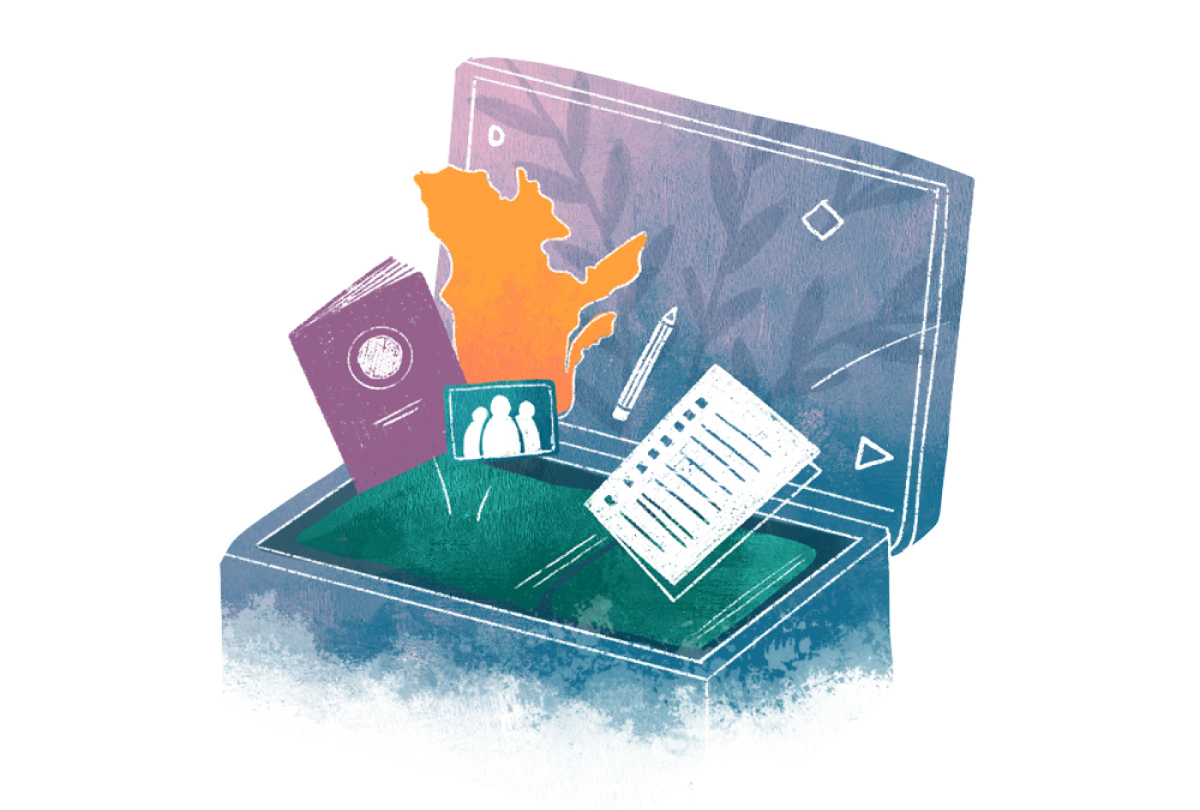
- Make a list of essentials to bring to make your trip less stressful.
Getting information from reliable sources
Learning about the process of immigrating and getting settled in Québec is essential to feel better prepared and equipped.
You can consult reliable sources like:
- The Government of Canada’s immigration and citizenship website
- The Government of Québec’s immigration website
- The website of Accompagnement Québec, a free service offered by the Government of Québec
- The website of the consulate of your country of origin
- IS The website of your educational institution
- This toolkit!
Important
Always check the URL and domain name of the websites you want to visit. Confirm that you are visiting the organization’s official site to prevent fraud.
Checking if you are eligible for the public insurance plans
Before you leave, it is important to check your eligibility with the RAMQ:
- You are eligible. Know that coverage generally begins after a waiting period of up to 3 months. During this period, it is strongly recommended that you take out private insurance. R However, if you are a refugee, you are automatically covered by the IFHP, and there are no steps you need to take.
- You are not eligible. It is strongly recommended that you take out private insurance and additional insurance policies, for example for services related to pregnancy or mental health.
Contacting people in Québec
“Contacting people you know in Québec can help you get ready! I was lucky: a friend of my mom’s came to meet me at the airport. She also put me in contact with other people in the province and gave me helpful addresses.”
Making a list of essentials
Myth. “Trying to get everything ready before you leave is more stressful.”
Feeling stressed about a big change is a very normal reaction. Getting ready to leave can be stressful in the moment, but proper planning can reduce stress down the road. Conversely, avoiding what is worrying you can make the situation harder to manage.
Source: Perone, S. A., Beerendonk, H. V., Avril, J., Bise, G., & Loutan, L., 2008
Packing your bags, remembering what you need to do, thinking about when you arrive, spending time with your loved ones before you leave… this can all be emotional!
Here are some essentials to help you feel ready to leave and take care of yourself. This list is not exhaustive and can vary depending on your situation.
Make sure to bring the most important documents with you in your carry-on bag. For more information: At the border: essential documents | Government of Canada.
- Valid passport
- Visa, study or work permit acceptance letter
- Employment contract or job offer
- Birth certificates for you and your family members who are immigrating
- Marriage or divorce certificate
- Prescriptions, medical records, vaccination records
- Degrees and transcripts (translated into French or English if they are in another language)
- Pay stubs from your previous jobs
- Professional letters of recommendation
- Valid driver’s licence and/or international licence
- Copy of all official documents
- Emergency contact information
- List of contacts in Québec
- Enough money
- Seasonal clothing
- Toiletry bag (toothbrush, toothpaste, deodorant, comb)
- Bring a small, meaningful item in your bags (photos, a stuffed animal for the children, a scarf, etc.).
- Let your loved ones know they might not be able to contact you when you arrive (trouble accessing the Internet, in transit) and shouldn’t worry.
Important
Some goods are prohibited or controlled in Canada. This may include food, medication and cultural objects. To avoid a fine or your goods being seized, visit What you can bring to Canada | Government of Canada before you leave.
Finding out about the requirements and restrictions of your migrant status
Knowing this information can help avoid stressful situations.
Access to services
Your migration status determines whether you can access certain public services in Québec, including health care and education.
To find out more
Process and wait times for temporary statuses
IS TFW Renewing or changing your immigration status can be a stressful, long and costly process. Being familiar with the process and wait times to renew or modify your temporary status helps you get ready and avoid costly mistakes.
To avoid problems:
- Read the conditions on your documents carefully (work permit, study permit, etc.).
- Stay informed of any changes to immigration policies or procedures.
- Start the process before your status expires.
- Keep track of key dates so you don’t forget anything.
Practical information for temporary statuses:
Don’t wait! It is essential to apply well before your current status expires. You can continue living, working or studying in Canada under the same conditions while your application is being processed.
You risk losing your rights and having to leave the country. In some cases, restoring your status is possible. To find out more: Restoration of temporary resident status | Government of Canada.
Sometimes it is possible to change from one temporary status to another, or from a temporary status to a permanent one. To find out more: Immigration | Government of Québec
Remember to Check processing times | Government of Canada.
IS TFW Before entering Canada, parents with a temporary permit must apply for:
- A CAQ for studies from the Government of Québec: Documents to submit for children under the age of 17 | Government of Québec
- A study permit from IRCC: Studying in Canada as a minor | Government of Canada
Perone, S. A., Beerendonk, H. V., Avril, J., Bise, G., & Loutan, L. (2008). Stress et santé mentale chez les expatriés. Revue médicale suisse, (157), 1206-1211. https://www.revmed.ch/revue-medicale-suisse/2008/revue-medicale-suisse-157/stress-et-sante-mentale-chez-les-expatries
First Winter
Learning about winter can help you relax and fully enjoy the season.
Key messages
- Discover the joys of winter! With proper winter clothes, you can take advantage of many activities while staying warm.
- To avoid loneliness at this time of year, continue to keep in touch with your loved ones, in person or from a distance.
- If the winter is affecting your mood and well-being, don’t hesitate to ask for professional support.
Winter in Québec
Winter in Québec lasts from November to April.
Dreading this season is normal: it is the coldest and darkest of the year. Days with heavy snow and ice storms can make it hard to get around.
Luckily, with time and adjustment, you can take advantage of winter’s beautiful landscapes and activities.
Did you know?
In the winter, it can get as cold as –30°C! These days of extreme cold are often accompanied by clear skies and bright sunshine.
Winter can also affect your emotions and thoughts. The colder months are often associated with these experiences:
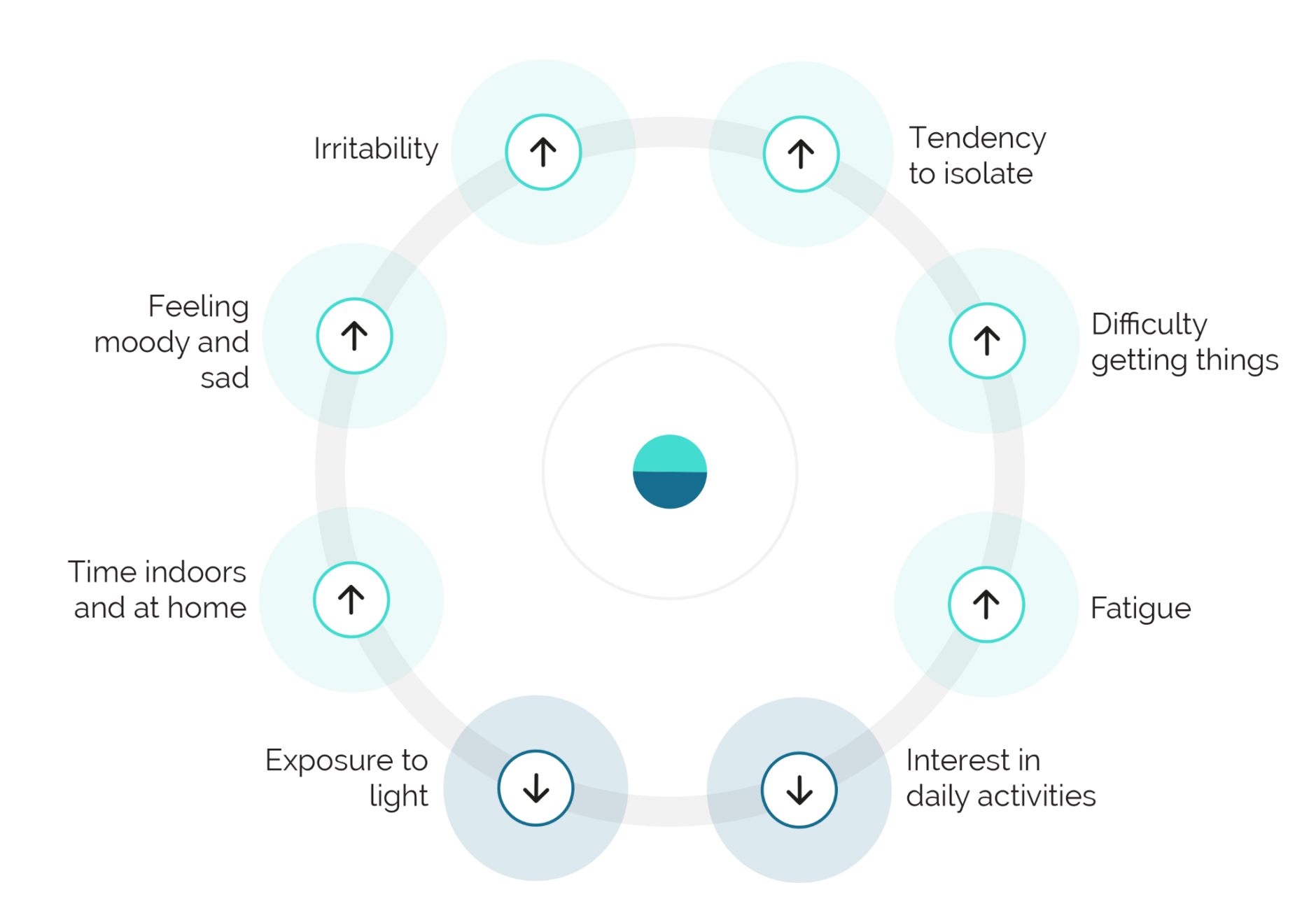
If winter is a difficult time, there are professional resources that can help you feel better. Don’t hesitate to contact them.
To find out more
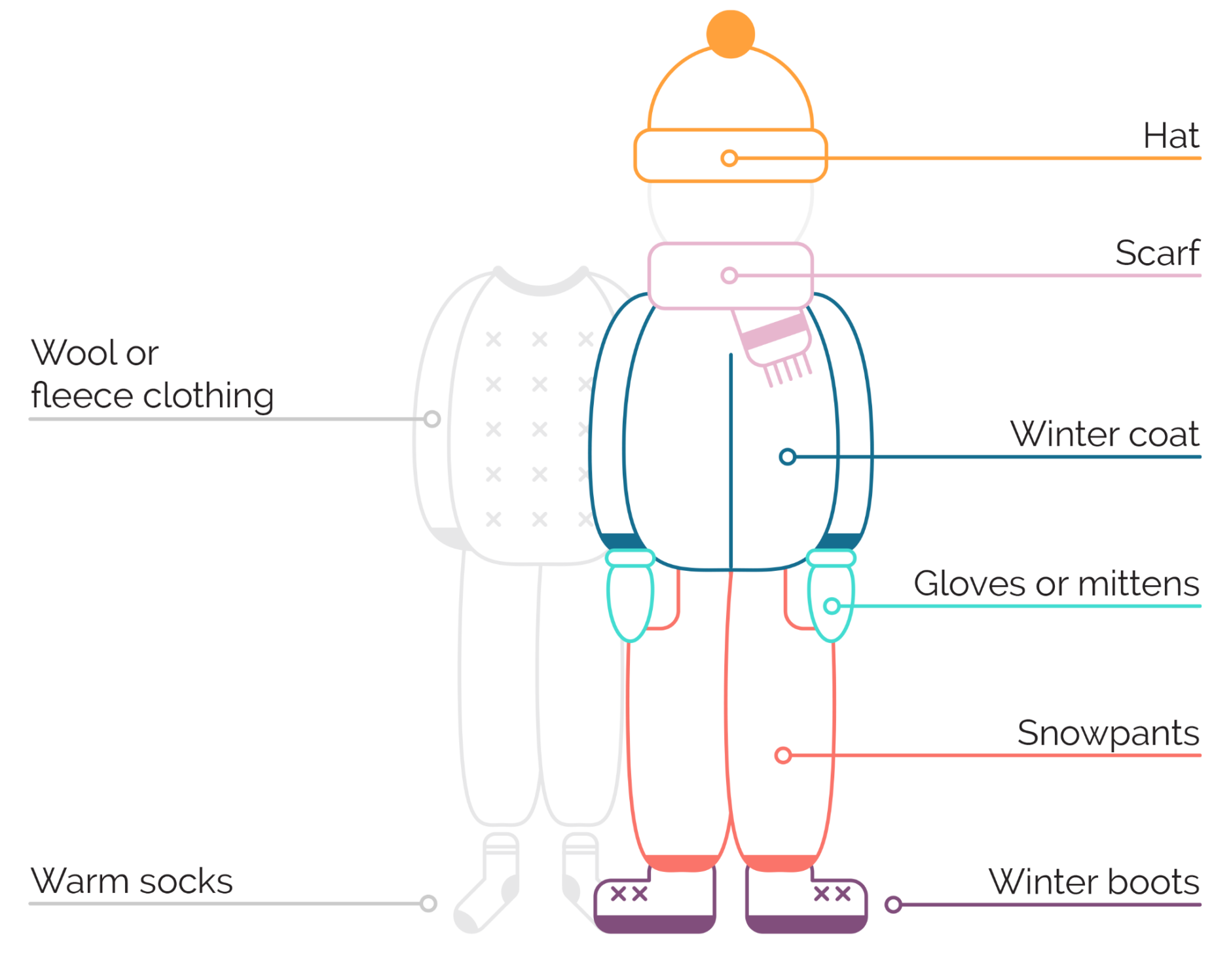
Having proper winter clothes
Having suitable clothing for winter in Québec is essential.
Important
Extreme cold can damage your skin and cause frostbite. To prevent this, protect your extremities: ears, nose, cheeks, fingers and toes.
Tips to save money:
- Ask people you know in Québec for advice.
- R Ask your sponsor or your host organization for advice.
- Visit community organizations, second-hand stores, etc.
- Take advantage of end-of-season sales.
“I bought a coat before immigrating to Québec and quickly realized it wasn’t warm enough to get me through the winter. My advice is to bring clothes for the first few days and buy the rest when you arrive.”
Getting enough natural light
Going outside on sunny winter days helps to combat seasonal depression.
Tips:
- Go on short walks (parks, local neighbourhoods).
- Try winter sports and activities (sledding, ice skating, skiing, snowshoeing, building a snowman, etc.).
“Municipal parks sometimes have equipment to rent for winter activities. Close to my home, you can rent tubes for free to slide down the hill at the park. The kids love it!”
Keeping in touch
To avoid feeling lonely and to have fun with others, keeping in touch with your loved ones and making new friends is important.
Tips:
- Spend time with a friend.
- Participate in a community activity in your neighbourhood.
- Go to events for all ages (local winter festivals, Québec Winter Carnival, etc.).
- Send photos and videos of the winter to your family abroad.
“The first winter was a shock for my mom, my sister and me. It was very different from anything we’d experienced in Syria! At first, it was hard for me to deal with the cold and spend time outside. But people here encouraged us to go out: walking, skating, building snowmen. Gradually, by having fun and spending time outdoors together, I grew to like the winter.”
Monnet. (2025). Comment s’habiller chaudement pour l’hiver? https://www.monnet-sports.com/fr/blog/se-proteger-du-froid/comment-shabiller-chaudement-lhiver
History, Geography and Society
Learning about Québec can help you know what to expect and feel at home more quickly.
Getting familiar with Québec’s geography
Québec is the largest of Canada’s 10 provinces. It is divided into 17 administrative regions.
Explore the map below to find out more about them. One of them will be welcoming you soon!
To find out more
Learning about Québec’s history
Did you know?
Indigenous peoples have been living in Canada since well before the Europeans arrived in the 16th century. Québec is therefore located on unceded Indigenous land. Colonization has had devastating effects on Indigenous peoples. Today, they are doing everything they can to recover and maintain their lands, languages, cultures and practices.
For people settling into Québec, knowing the province’s history can help you understand:
- Indigenous peoples’ work to gain recognition for their right to self-determination and to maintain their languages, cultures, skills and ways of life
- Québec’s struggle for political autonomy, particularly when it comes to immigration
- The importance of preserving the French language and Québec’s culture
- The importance of promoting the linguistic integration of newcomers
“By learning about Québec’s history at school, I realized why French is so important here. It’s more than a language issue: it’s also a symbol of resistance. Many people in Québec are proud of it.”
Discovering Québec society
Learning about your new society can help you understand social interactions and local norms. This can reduce adjustment-related stress.
These 2 resources can help you get your bearings:
Immigrer au Québec guide
- Free
- In French
- Information on the workplace, studying getting ready and getting settled
- Immigrer au Québec | Immigrant Québec [in French]
Centre d’expertise sur le bien-être et l’état de santé physique des réfugiés et des demandeurs d’asile (CERDA). (2025). À propos. Reconnaissance territoriale. Carnets de route. https://carnetsderoute.info/a-propos/
L’Encyclopédie Canadienne. (2025). Chronologie : Peuples autochtones. Dans L’Encyclopédie Canadienne. https://thecanadianencyclopedia.ca/fr/chronologie/first-nations
L’Encyclopédie Canadienne. (2020). Génocide et peuples autochtones au Canada. Dans L’Encyclopédie Canadienne. https://www.thecanadianencyclopedia.ca/fr/article/genocide-and-indigenous-peoples-in-canada