



- Free 24-hour session offered throughout Québec
- Information about Québec (cultural norms, workplace, etc.)
- Age 18 or older
- Intermediate French required
- TFW IS Eligibility verification required
- Financial assistance available in some cases
- Objectif Intégration Information Session for Immigrants | Government of Québec
Diversity and Intercultural Exchanges
Feeling like there is a place for you in your new society can support your well-being and help you settle in.
Key messages
- Learning about the local culture can make it easier to adjust and help you feel like you belong.
- Feeling confused and stressed when you arrive in a new environment is normal. Don’t hesitate to ask for help if you are struggling.
- By sharing parts of your own culture that are important to you, you are contributing to your society’s collective richness.
Finding your bearings
Participating in an Objectif Intégration information session offered by the MIFI can help you get your bearings in your new environment.
Discovering the habits and daily lives of people in Québec can help you feel more comfortable. Here are some things to know:
French is important in Québec: it is the only official language in the province. Knowing the basics can make settling in easier.
To find out more
Many people in Québec value their history, culture and sports teams. Learning about them can open many doors.
You can learn about :
- Movies from Québec: Films du Québec [in French]
- Actors from Québec : Les meilleurs livres québécois de tous les temps selon Esprit critique | Les libraires [in French]
- Music from Québec : MUSIQC [in French]
- Sports teams from Québec (hockey, soccer)
- Radio stations and TV programs from Québec : Ohdio TOUT.TV [in French]
Did you know?
In Québec, hockey is the national sport. The Montréal Canadians and Montréal Victoire have many fans.
In the summer, soccer and football are also popular. CF Montréal, the Montréal Roses and the Montréal Alouettes generate a lot of excitement.
Many initiatives promote cultural, religious and gender diversity in Québec society.
Examples include :
- Festivals like Nuits d’Afrique, Accès Asie, Haïti en Folie and Black History Month celebrate different cultures
- Religious holidays like Ramadan, Yom Kippur and Diwali can be accommodated by schools and workplaces.
- Québec stands out for its progressive laws on 2SLGBTQIA+ rights. Sexual and gender diversity is celebrated at festivals like Fierté Montréal.
Many people in Québec are environmentally conscious. For some, recycling, composting and reducing your ecological footprint are part of everyday life.
Participating in cultural events is a great way to get to know people.
- Québec’s national holiday, also called Saint-Jean-Baptiste Day, on June 24
- The Québec Winter Carnival
- Sugar shacks, a springtime tradition
- Many festivals (Festival d’été de Québec, Les Francos de Montréal, etc.)
Physical contact is usually reserved for family and close friends. In social and professional situations, people greet each other by shaking hands.
When speaking French, using the informal “tu” instead of “vous” is common, even between people who don’t know each other well. Out of politeness, people usually use “vous” until they are invited to use “tu.”
On public transit (bus, metro), people line up and wait their turn. People generally speak quietly and give up their seats to seniors, pregnant people and people with disabilities.
In Québec, smoking and vaping are illegal in indoor public spaces (workplaces, hospitals, etc.) and some outdoor public spaces. It is important to respect designated areas. Rules may also apply to apartments.
Recreational cannabis is legal in Canada for adults aged 21 or older, but prohibited in public spaces. In Québec, only the Société québécoise du cannabis (SQDC) is allowed to sell it.
In Québec, different words are used for meals than in other Francophone countries. To avoid misunderstandings, here are the most frequently used terms.
- Déjeuner = breakfast (morning)
- Dîner = lunch (midday)
- Souper = dinner/supper (evening)
Adjusting to a new environment
Adjusting to a new environment can be stressful and confusing. This is what some people call culture shock.
It is normal to question certain ways of doing things or ways of thinking that are different from what you are used to. It is a learning process, and the steps and time it takes are different for everyone.
Difficulty adjusting to a new environment is temporary and not always obvious from the moment you arrive. This often occurs in several phases: some are more challenging, and others are easier to cope with.
Important
Not being aware of the challenges that come with adjusting can have a negative impact on your well-being.
Explore the following graphic to better understand these phases, recognize what you are feeling and learn how to get through this period.






Don’t hesitate to ask for help if you are having a hard time and struggling to function.
Find out more
Finding your place in a diverse society
Québec is a society where different cultures live side by side, especially in urban areas. This diversity can help you feel comfortable and find your place.
It also contributes to Québec’s collective richness. Immigrant and refugee communities take part through their music, their ways of doing things, their food and their art.
For example:
- Community gatherings and events like the Festival cinéma du monde de Sherbrooke
- “Fusion” foods, which combine culinary practices from different origins to create original dishes
- Lively multicultural spaces like the Marché Jean-Talon in Montréal
“Joining a soccer team immediately made me feel like I was part of a group. It provided stability in my new daily life. What struck me was the diverse backgrounds of the teams we played against! I realized that in Québec, there is a place for everyone.”
Québec’s diversity is part of a long tradition of hospitality and solidarity.
Learning about this history can help you:
- Understand that you are joining a society where many people have backgrounds like yours
- Rely on the support of long-established communities
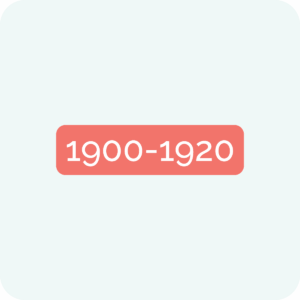
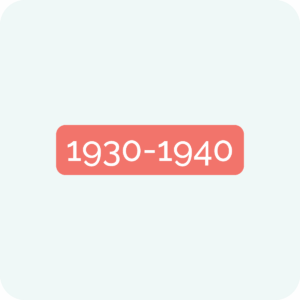
Explore the timeline below to learn about the history of immigration in Québec.
Portugal and Italy
Haiti and Greece
Lebanese Civil War
Latin America
from Ireland
and China
Civil War
super-diversity
in Ukraine
from Europe
and arrival
of refugees
and the Second
World War









Connecting with your community and beyond
Connecting with your community of origin can provide comfort and help you preserve practices that are important to you.
Learning about the local culture doesn’t mean rejecting your culture. Navigating different cultural environments allows you to learn from others and share your experiences.
Bringing together people from different backgrounds and sharing experiences helps build a sense of community.
Did you know?
Some community organizations and educational institutions offer intercultural exchange activities. These activities connect newcomers with people who were born in or have been living in Québec for several years. They provide opportunities to meet people from different backgrounds, learn from one another, and develop new relationships.
Find out what activities and spaces promote intercultural exchanges:
- Libraries and cultural centres
- Community centres
- Cultural events (for example, the Semaine québécoise des rencontres interculturelles)
- Intercultural exchange programs
- Inclusive sports leagues
Antonious, R. (2011). Les communautés arabes au Canada et au Québec. Dans G. Martin Muñoz (Ed.), Árabes en las dos Américas. Casa Árabe. https://classiques.uqam.ca/contemporains/antonius_rachad/communautes_arabes_Canada_Qc/communautes_arabes_Canada_Qc_texte.html
Avery, D. H., & Fedorowicz, J. K. (1982). Les Polonais au Canada (Les groupes ethniques du Canada, p. 26). La société historique du Canada. https://cha-shc.ca/wp-content/uploads/2022/08/5c37565f470ac.pdf
Bilan Québec. (2025). Arrivée massive de réfugiés asiatiques au Canada et au Québec. Perspective Monde – Université Sherbrooke. https://perspective.usherbrooke.ca/bilan/quebec/evenements/20249?
Brabant, A. (2017). L’immigration libanaise à Montréal depuis 1940. Dans Encyclopédie du MEM. https://ville.montreal.qc.ca/memoiresdesmontrealais/limmigration-libanaise-montreal-depuis-1940
Canadian Council for Refugees. (2025). Histoire — 100 ans d’immigration au Canada 1900-1999. Canadian Council for Refugees. https://ccrweb.ca/fr/issues/history
Consortium d’animation sur la persévérance et la réussite en enseignement supérieur (CAPRES). Étudiants internationaux en enseignement supérieur. https://oresquebec.ca/dossiers/etudiants-internationaux-en-enseignement-superieur/
Fourcade, M.-B. (2018). Un fragment de l’histoire du génocide arménien à Montréal. Dans Encyclopédie du MEM. https://ville.montreal.qc.ca/memoiresdesmontrealais/un-fragment-de-lhistoire-du-genocide-armenien-montreal
Gkintidis, D. (2019). Migration grecque au Québec : Logiques sociales et dilemmes linguistiques. Grèce Hebdo. https://www.grecehebdo.gr/migration-grecque-au-quebec-logiques-sociales-et-dilemmes-linguistiques/
Immigration Réfugiés et Citoyenneté Canada (IRCC). (2019). [ARCHIVÉ] Canada – Admissions de réfugiés syriens* selon la province / le territoire de destination envisagé(e) et la catégorie d’immigration [Jeu de données]. Gouvernement du Canada. https://ouvert.canada.ca/data/fr/dataset/01c85d28-2a81-4295-9c06-4af792a7c209/resource/acf18d65-274c-423e-988d-935fcf0572eb?inner_span=True
Immigration Réfugiés et Citoyenneté Canada (IRCC). (2022). Mesures d’immigration et de soutien pour les Ukrainiens et les membres de leur famille. Gouvernement du Canada. https://www.canada.ca/fr/immigration-refugies-citoyennete/services/immigrer-canada/mesures-ukraine.html
Leclerc, J. (2025). L’enjeu de l’immigration. L’aménagement linguistique dans le monde. https://www.axl.cefan.ulaval.ca/amnord/Quebec-4immigration.htm
Noël, J. (2017). L’église Sainte-Anne et les Irlandais catholiques de Griffintown. Dans Encyclopédie du MEM. https://ville.montreal.qc.ca/memoiresdesmontrealais/leglise-sainte-anne-et-les-irlandais-catholiques-de-griffintown
Oberg, K. (1960). Cultural shock: Adjustment to new cultural environments. Practical Anthropology, 7, 177–182
Observatoire sur la réussite en enseignement supérieur (ORES). (2023). Étudiants internationaux en enseignement supérieur. Observatoire sur la réussite en enseignement supérieur. https://oresquebec.ca/dossiers/etudiants-internationaux-en-enseignement-superieur/
Parcs Canada. (2016). L’arrivée de personnes déplacées au Canada de 1945 à 1951 [Document d’information]. Gouvernement du Canada. https://www.canada.ca/fr/parcs-canada/nouvelles/2016/02/l-arrivee-de-personnes-deplacees-au-canada-de-1945-a-1951.html
Paré, O. (2017). L’immigration chinoise à Montréal. Dans Encyclopédie du MEM. https://ville.montreal.qc.ca/memoiresdesmontrealais/limmigration-chinoise-montreal
Statistique Canada. (2016). 150 ans d’immigration au Canada. Gouvernement du Canada. https://www150.statcan.gc.ca/n1/pub/11-630-x/11-630-x2016006-fra.htm
Statistique Canada. (2023). Minorité visible selon le genre et l’âge : Canada, provinces et territoires. Gouvernement du Canada. https://www150.statcan.gc.ca/t1/tbl1/fr/tv.action?pid=9810035101
Sturino, F. (2024). Italo-Canadiens. Dans L’Encyclopédie Canadienne. Repéré à https://thecanadianencyclopedia.ca/fr/article/italo-canadiens
Vega, R. V. (2017). Les Latino-Américains à Montréal. Dans Encyclopédie du MEM. https://ville.montreal.qc.ca/memoiresdesmontrealais/les-latino-americains-montreal
Dealing with Discrimination
Knowing what discrimination is, what its effects are and what resources are available to support you can help you cope with difficult situations.
Key messages
- Discrimination can cause distress and affect your self-esteem. Don’t hesitate to ask for help if things get hard.
- Discrimination is illegal in Québec. Resources are available to support you and help you assert your rights.
- If you experience discrimination, don’t face it alone. Surrounding yourself with friendly people makes it easier to face challenges.
What is discrimination?
Discrimination means treating someone unfairly because of who they are and preventing them from asserting their rights.
It can be based on a person’s:
- Ethnic origin
- Skin colour
- Gender identity
- Sexual orientation
- Religion
- Disability
- Age
- Economic situation
- Etc.
It is possible to experience several forms of discrimination at the same time (for example, if you are racialized and disabled).
Discrimination can take different forms :
- Attitudes (ignorance, contempt, indifference)
- Words (insults, taunts, threats)
- Behaviours (withholding services, exclusion, being watched without a valid reason)
- Verbal, psychological or physical violence.
It may be visible or hidden in daily life. Sometimes, it influences the way you are treated by institutions.
Discrimination in Québec
Like other places in the world, discrimination is an issue in Québec. In 2015, 1 in 5 (19%) people in Québec (Institut de la statistique du Québec, 2015) said they had experienced discrimination based on their language, ethnic origin, race or religion in the last 5 years.
Luckily, there are laws and resources that protect you from discrimination:
- The Charter of Human Rights and Freedoms prohibits all forms of discrimination.
- The Act Respecting Labour Standards protects you from psychological harassment and discrimination in the workplace.
In public spaces, equity and inclusion are encouraged.
Quiz
Résultats
#1. Not hiring someone who is skilled because of their origins.
#2. A “neutral” rule that harms a group of people, like requiring parents to be fully available without considering their circumstances.
#3. Actions, jokes or comments that may seem harmless, but can be harmful over time.
#4. Repeated behaviours that devalue, intimidate or harm a person.
Effects of discrimination
Myth: “Experiencing discrimination is a normal part of life. You should ignore it and move on.”
Reality. your mental health. People who experience racism in Canada are more likely to rate their mental health as fair or poor. They are twice as likely to report this than people who do not experience discrimination. It is important not to ignore the effects this experience can have and to seek support.
Source: Sinha, M., 2025
Discrimination can cause:
- Depression
- Anxiety
- Chronic stress
- Fatigue
- Emotional distress
- Isolation
- Negative emotions
- Loss of self-confidence
Exercise
Understanding discrimination is the first step to combating it.
Ask yourself the following questions:
- Am I being treated differently than other people in the same situation?
- Does a regulation seem to disadvantage a specific person or group?
- Is the behaviour of a person or group devaluing or excluding me?
- How do I feel in this situation? (sad, angry, ashamed, scared)
- What could I do to help regain control of the situation?
What to do if you experience discrimination
Asking for help
Discrimination is illegal in Québec. Asking for help is an act of bravery and self-compassion.
Appropriate support is available to:
- Boost your well-being
- File a complaint
- Get legal assistance
Talking to a professional (community counsellor, social worker, psychologist, etc.) can give you a safer space to:
- Talk about your experience and emotions
- Identify your needs
- Find solutions to address the situation
To find out more
Community and government resources are also available:
Commission des droits de la personne et des droits de la jeunesse (CDPDJ)
- To report discrimination, harassment or a violation of rights protected by the Québec Charter, including children’s rights
- Home | Commission des droits de la personne et de la jeunesse
Commissaire à la déontologie policière
- To report conduct that violates the Code of Ethics of Québec Police Officers by a person expected to uphold it
- Home | Commissaire à la déontologie policière
Québec Ombudsman
- To report misconduct or abuse involving Québec’s public services
- Home | Protecteur du citoyen
Complaints and service quality commissioner for the health and social services network
- To report rights violations or mistreatment in the health and social services network
- The health and social services network complaint examination system | Government of Québec
Crime Victims Assistance Centres (CAVAC)
- Support, assistance and information for people who experience or witness a criminal act and their loved ones
- 1-866-532-2822
- Home | Crime Victims Assistance Centre
AGIR Montréal
- Support for 2SLGBTQIA+ migrants
- Multilingual
- Home | AGIR Montréal
Kids Help Phone
- Mental health support for children, teens and young adults
- Phone, text and chat
- 1-800-668-6868
- Home | Kids Help Phone
Info-Social 811
- Social services advice and referrals
- 24 hours a day, 7 days a week
- Free
- 811, option 2
211
- Information and referrals to social and community resources
- Phone and chat available in over 200 languages
- Free
- 211
- Home | 211 Montréal, Gatineau
- Home | 211 Eastern and Northern Québec
Avoiding isolation
After experiencing discrimination, it is normal to want to isolate yourself. But being alone for too long can make things worse.
Getting support from a community can make the situation easier to bear. Joining a group or participating in community activities allow you to:
- Talk to other people who have had similar experiences
- Build relationships of trust
- Strengthen your ability to face challenges and your self-confidence
- Feel like you belong
Examples of groups or activities:
- Community organizations offering support to immigrants and refugees
- IS Support groups and student associations
- Rights organizations, such as Canadian Council for Refugees, Ligue des droits et libertés, Solidarity Across Borders
- Community-building events, such as Semaine d’actions contre le racisme et pour l’égalité des chances and Montreal’s Hoodstock festival
- Workshops aiming to promote diversity and fight discrimination, such as Ensemble pour le respect de la diversité interactive workshops (school environments) and workshops on rights offered by the Ligue des droits et libertés, Section de Québec
Practising self-compassion
If you experience discrimination, it is important to be kind to yourself and stay true to who you are. This can make it easier to face adversity.
Tips:
- Treat yourself with kindness and understanding rather than judging or criticizing yourself.
- Set firm boundaries without hurting others.
- Remember that discrimination is the fault of the people, groups and organizations that discriminate, not the people who experience discrimination.
Did you know?
Discriminatory practices are often part of well-established societal habits, norms and prejudices. They make it harder for some people to access services and opportunities, whether intentionally or not.
Agence de la santé publique du Canada. (2024). Inégalités en matière de santé mentale, de bien-être et de mieux-être au Canada. Gouvernement du Canada. https://sante-infobase.canada.ca/src/data/mhrd/pdf/Inegalites-en-matiere-de-sante-mentale-sommaire.pdfhttps://sante-infobase.canada.ca/src/data/mhrd/pdf/Inegalites-en-matiere-de-sante-mentale-sommaire.pdf
Gravel, M.-A. (2015). Coup d’œil sociodémographique : Portrait de la discrimination au Québec (44). Institut de la statistique du Québec. https://statistique.quebec.ca/en/fichier/portrait-de-la-discrimination-au-quebec.pdf
Observatoire québécois des inégalités raciales au Québec (OIRQ). (2025). État de la recherche sur les disparités socio-économiques et les discriminations raciales à l’emploi au Québec – Bulletin 1. https://oirq.org/bulletin-1/
Ville de Québec. (2025). Vivre ensemble. Les migro-agressions. https://www.ville.quebec.qc.ca/citoyens/vivre-ensemble/aide-memoire/micro-agressions.aspx